
Storybloks.
Leveraging interactive storytelling to help Speech Therapists assess Speech Disorders
project type.
Course Work
timeline.
8 months
applied skills.
Design Research
3D Modelling
UI/UX Design
the problem.
Manual, time-consuming, and boring assessment experiences lead to ineffective data collection
For Speech Therapists today, the current process for evaluating speech disorders and doucmentng key findings is time consuming and disorganized. The processes for data collection are also manual and lack important context due to a therapists need to multitask for notetaking.
Clients, most commonly young children and their families, also find the evaluations process boring and administrative which leads to disengagement and distraction.
the solution.
Integrating data collection capabilities into child-oriented play experiences
An interactive story-building toy which leverages the common play experience of building blocks to keep young clients engaged during assessments, reducing boredom and distraction to allow for more effective data collection
Embedded microphones within the blocks and and video capture from a companion app experience afford more discrete and hands-free data collection, allowing the therapist to focus more on engagement with the client.

understanding the evalutation process.
Documenting the touchpoints of an evaluation
Understanding the experiences of both audiences
The evaludation process can last between 45 minutes to 2 hours depending on the child's age and their attention span. The evaluation begins with interviews with guardians to establish a baseline and gather insights, and then playtime with the child to identify any behavioral anomalies.
Evaluations begin with interviews with guardians to establish a baseline and gather insights, and then progress to playtime with the child to identify any behavioral anomalies.
Across both key users, the highest area of friction is in the standardized testing portion where a child is engaged in conversation by the therapist, and the therapist manudally notes findings in a notebook
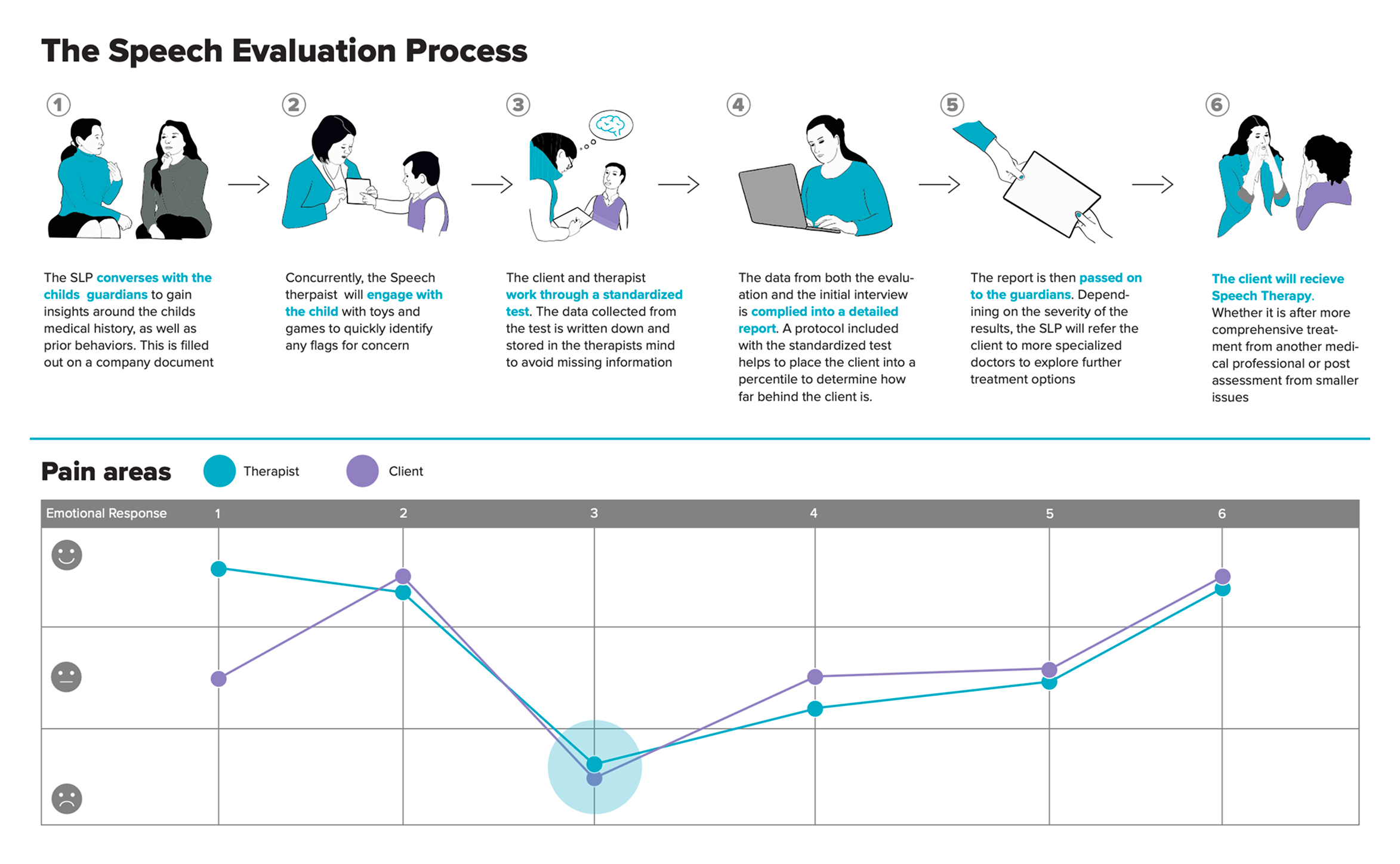
How might we make standardized testing more engaging, and provide therapists with more effective data collection tools?
looking outward.
Using positive distraction to make clinical experience more engaging
About Positive Distraction
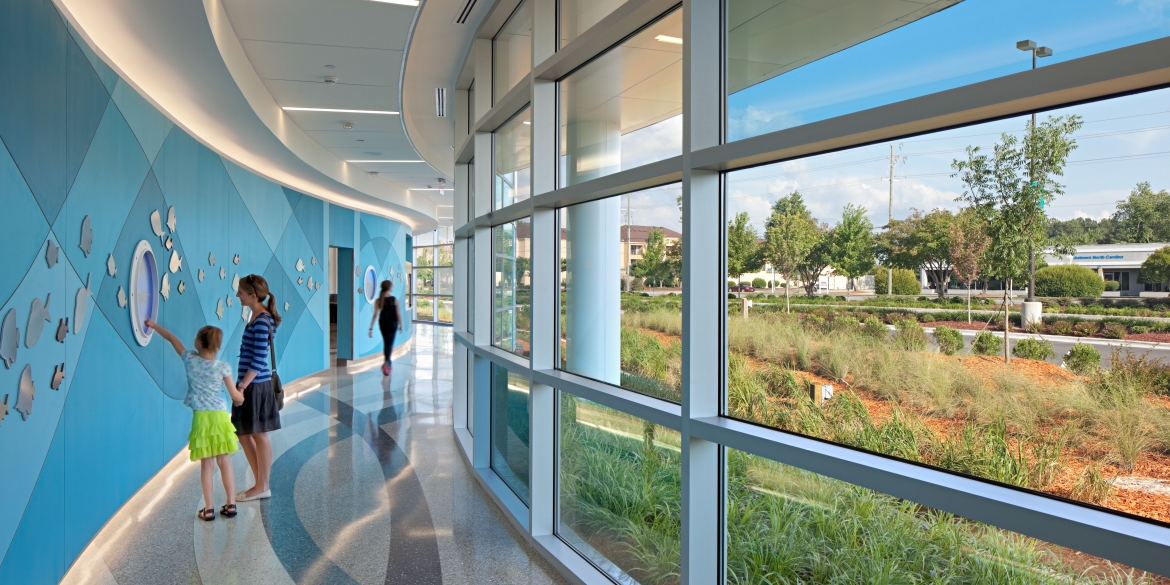
Positive distraction can be defined as “A feature that elicits positive feelings and holds attention without taxing or stressing the individual, thereby blocking worrisome thoughts." By applying this logic
to speech evaluations, Positive distractions would allow for better enagement during evaluations.
By applying this logic to speech evaluations, Positive distractions would allow for better enagement during evaluations.
concept explorations.
Generating concepts that promote hands-off data collection
Ideation
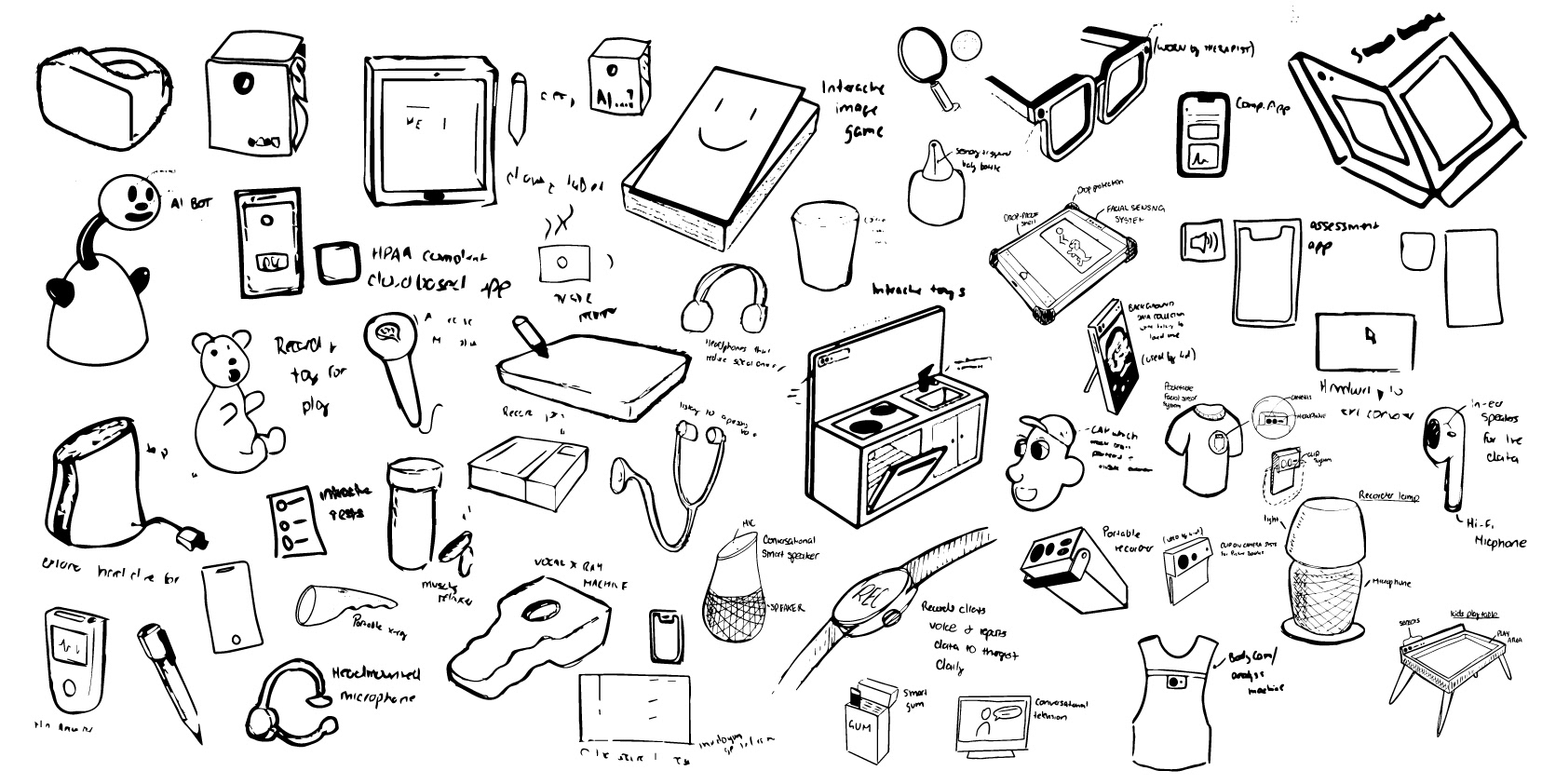
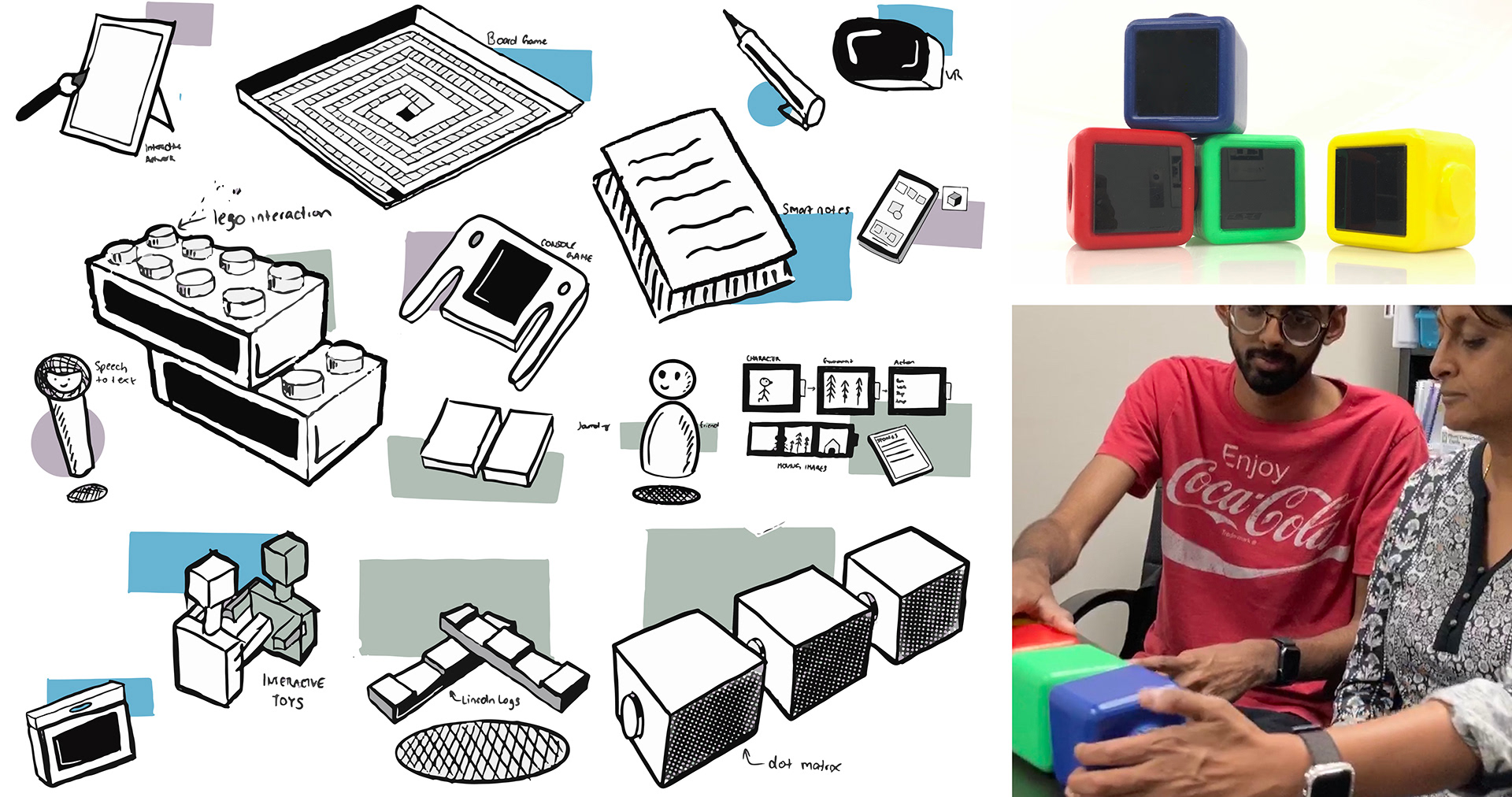
Initial sketches focused primarily on reframing current evaluation tools and childrens toys with interactive and ‘positive distraction’ features to foster more effective data collection
Through these sketches, the concept of leveraging “play-based collaboration as a lever for natural conversation” emerged as a mechanism for data collection
Iteration
Within “Play-based collaboration”, Iterations focused on collaborative game-based activities that required constant verbal communication to foster more natural listening opportunities for SLP’s. Different forms were sketched and modeled to find test different tangible interactions.
The idea of a connected block system was selected and 3D printed for scale, and shown to my users for feedback and buy-in.
design solutions.
Integrating data collection capabilities into familiar play experiences to reduce distraction for clients and cognitive load for SLP’s
The Storybloks Concept
Positive distraction can be defined as “A feature that elicits positive feelings and holds attention without taxing or stressing the individual, thereby blocking worrisome thoughts." By applying this logic
to speech evaluations, Positive distractions would allow for better enagement during evaluations.
By applying this logic to speech evaluations, Positive distractions would allow for better enagement during evaluations.
The Blocks
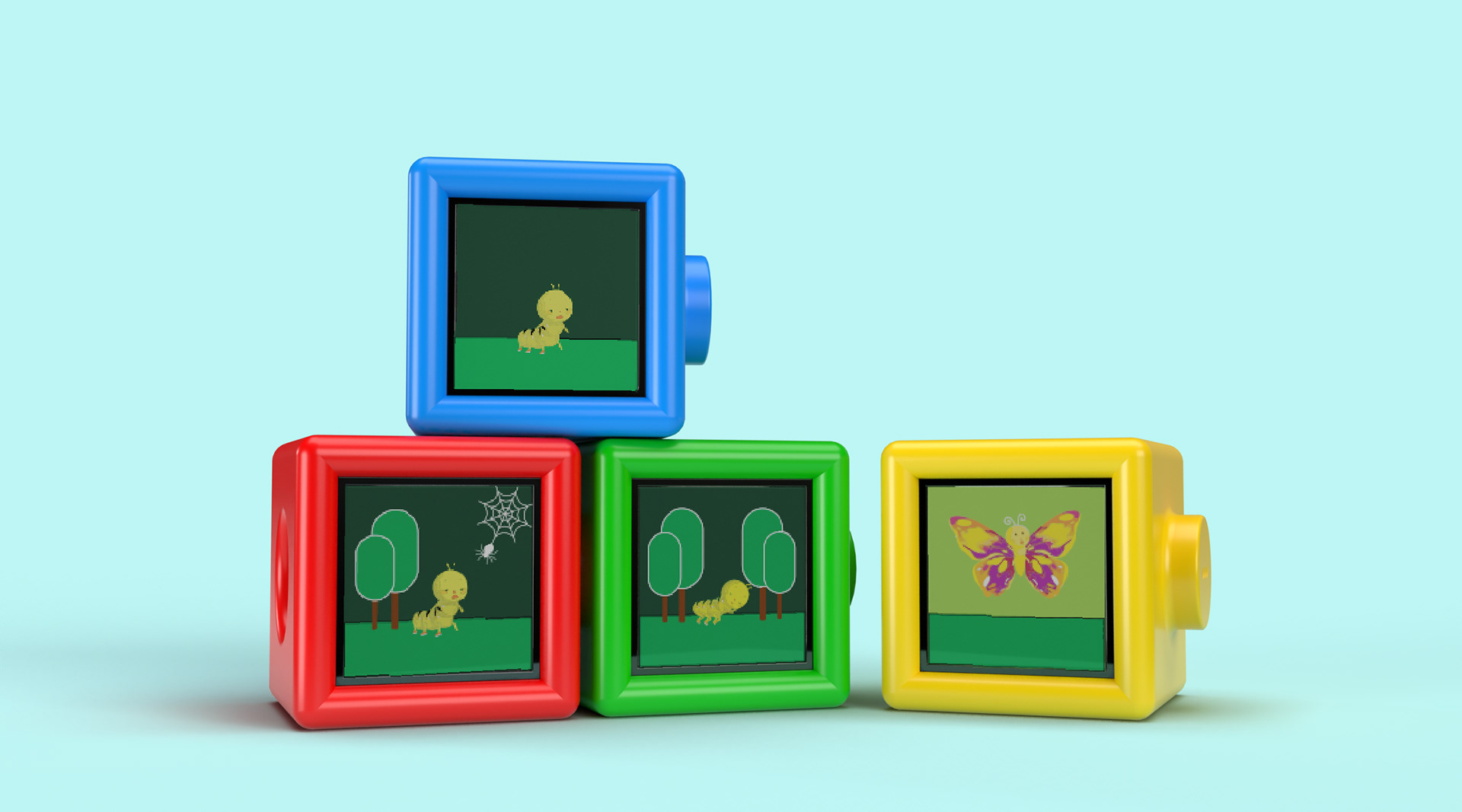
Each block represents a scene in the story. Together, the Speech therapist and their client can collaborate to build and watch the stories move across the displays.
Silicone Cases surround each block to offer durability and protection to the internal components, as well as prevent injury to the children interacting with them.
Magnetic Connection pins on each of the blocks bring a seamless building experience for the users and allows for the displays to communicate with each other.
Embedded speakers and microphones vocalize the stories, and collect essential vocal data from the clients for the speech therapists to further analyze
The Dock
Positive distraction can be defined as “A feature that elicits positive feelings and holds attention without taxing or stressing the individual, thereby blocking worrisome thoughts." By applying this logic
to speech evaluations, Positive distractions would allow for better enagement during evaluations.
The Companion App
Positive distraction can be defined as “A feature that elicits positive feelings and holds attention without taxing or stressing the individual, thereby blocking worrisome thoughts." By applying this logic
to speech evaluations, Positive distractions would allow for better enagement during evaluations.
product video.
2026 PAVAN R.


Storybloks.
Leveraging interactive storytelling to help Speech Therapists assess Speech Disorders
project type.
Course Work
timeline.
8 months
applied skills.
Design Research
3D Modelling
UI/UX Design
the problem.
Manual, time-consuming, and boring assessment experiences lead to ineffective data collection
For Speech Therapists today, the current process for evaluating speech disorders and doucmentng key findings is time consuming and disorganized. The processes for data collection are also manual and lack important context due to a therapists need to multitask for notetaking.
Clients, most commonly young children and their families, also find the evaluations process boring and administrative which leads to disengagement and distraction.
the solution.
Integrating data collection capabilities into child-oriented play experiences
An interactive story-building toy which leverages the common play experience of building blocks to keep young clients engaged during assessments, reducing boredom and distraction to allow for more effective data collection
Embedded microphones within the blocks and and video capture from a companion app experience afford more discrete and hands-free data collection, allowing the therapist to focus more on engagement with the client.

understanding the evalutation process.
Documenting the touchpoints of an evaluation
Understanding the experiences of both audiences
The evaludation process can last between 45 minutes to 2 hours depending on the child's age and their attention span. The evaluation begins with interviews with guardians to establish a baseline and gather insights, and then playtime with the child to identify any behavioral anomalies.
Evaluations begin with interviews with guardians to establish a baseline and gather insights, and then progress to playtime with the child to identify any behavioral anomalies.
Across both key users, the highest area of friction is in the standardized testing portion where a child is engaged in conversation by the therapist, and the therapist manudally notes findings in a notebook
How might we make standardized testing more engaging, and provide therapists with more effective data collection tools?
looking outward.
Using positive distraction to make clinical experience more engaging
About Positive Distraction
Positive distraction can be defined as “A feature that elicits positive feelings and holds attention without taxing or stressing the individual, thereby blocking worrisome thoughts." By applying this logic
to speech evaluations, Positive distractions would allow for better enagement during evaluations.
By applying this logic to speech evaluations, Positive distractions would allow for better enagement during evaluations.
concept explorations.
Generating concepts that promote hands-off data collection
Ideation
Initial sketches focused primarily on reframing current evaluation tools and childrens toys with interactive and ‘positive distraction’ features to foster more effective data collection
Through these sketches, the concept of leveraging “play-based collaboration as a lever for natural conversation” emerged as a mechanism for data collection
Iteration
Within “Play-based collaboration”, Iterations focused on collaborative game-based activities that required constant verbal communication to foster more natural listening opportunities for SLP’s. Different forms were sketched and modeled to find test different tangible interactions.
The idea of a connected block system was selected and 3D printed for scale, and shown to my users for feedback and buy-in.
design solutions.
Integrating data collection capabilities into familiar play experiences to reduce distraction for clients and cognitive load for SLP’s
The Storybloks Concept
Positive distraction can be defined as “A feature that elicits positive feelings and holds attention without taxing or stressing the individual, thereby blocking worrisome thoughts." By applying this logic
to speech evaluations, Positive distractions would allow for better enagement during evaluations.
By applying this logic to speech evaluations, Positive distractions would allow for better enagement during evaluations.
The Blocks
Each block represents a scene in the story. Together, the Speech therapist and their client can collaborate to build and watch the stories move across the displays.
Silicone Cases surround each block to offer durability and protection to the internal components, as well as prevent injury to the children interacting with them.
Magnetic Connection pins on each of the blocks bring a seamless building experience for the users and allows for the displays to communicate with each other.
Embedded speakers and microphones vocalize the stories, and collect essential vocal data from the clients for the speech therapists to further analyze
The Dock
Positive distraction can be defined as “A feature that elicits positive feelings and holds attention without taxing or stressing the individual, thereby blocking worrisome thoughts." By applying this logic
to speech evaluations, Positive distractions would allow for better enagement during evaluations.
The Companion App
Positive distraction can be defined as “A feature that elicits positive feelings and holds attention without taxing or stressing the individual, thereby blocking worrisome thoughts." By applying this logic
to speech evaluations, Positive distractions would allow for better enagement during evaluations.
product video.
Storybloks.
Leveraging interactive storytelling to help Speech Therapists assess Speech Disorders
project type.
Course Work
timeline.
8 months
applied skills.
Design Research
3D Modelling
UI/UX Design
the problem.
Manual, time-consuming, and boring assessment experiences lead to ineffective data collection
For Speech Therapists today, the current processes for evaluating speech disorders and documenting key findings is time consuming, disorganized, manual, and can lack important context due to a therapists need to multitask during evaluations.
Clients, most commonly young children and their families, also find the evaluations process boring and administrative which leads to disengagement and distraction.
the solution.
Integrating data collection capabilities into child-oriented play experiences
An interactive story-building toy which leverages the common play experience of building blocks to keep young clients engaged during assessments, reducing boredom and distraction to allow for more effective data collection
Embedded microphones within the blocks and and video capture from a companion app experience afford more discrete and hands-free data collection, allowing the therapist to focus more on engagement with the client.

mapping the user journeys.
Documenting the touchpoints of an evaluation
Understanding the experiences of both audiences
I conducted interviews and surveys with Speech therapists and client families to understand the areas of friction within the evaluation process from initial assessment through care.
Evaluations begin with interviews with guardians to establish a baseline and gather insights, and then progress to playtime with the child to identify any behavioral anomalies.
Across both key users, the highest area of friction is in the standardized testing portion where a child is engaged in conversation by the therapist, and the therapist manually notes findings in a notebook
How might we make standardized testing more engaging, and provide therapists with more effective data collection tools?
looking outward.
Using positive distraction to make clinical experience more engaging
About Positive Distraction
Positive distraction can be defined as “A feature that elicits positive feelings and holds attention without taxing or stressing the individual, thereby blocking worrisome thoughts."
By applying this logic to speech disorder evaluations, Positive distractions would create more engaging experiences for young clients.
concept explorations.
Generating concepts that promote hands-off data collection
Ideation
Initial sketches focused primarily on reframing current evaluation tools with interactive and ‘positive distraction’ features to foster more effective data collection
Through these sketches, the concept of leveraging “play-based collaboration as a lever for natural conversation” emerged as a mechanism for data collection
Iteration
Within “Play-based collaboration”, Iterations focused on collaborative game-based activities that required constant verbal communication to foster more natural listening opportunities for SLP’s. Different forms were sketched and modeled to find test different tangible interactions.
The idea of a connected block system was selected and 3D printed for scale, and shown to my users for feedback and buy-in.
design solutions.
Integrating data collection capabilities into familiar play experiences to reduce distraction for clients and cognitive load for SLP’s
The Storybloks Concept
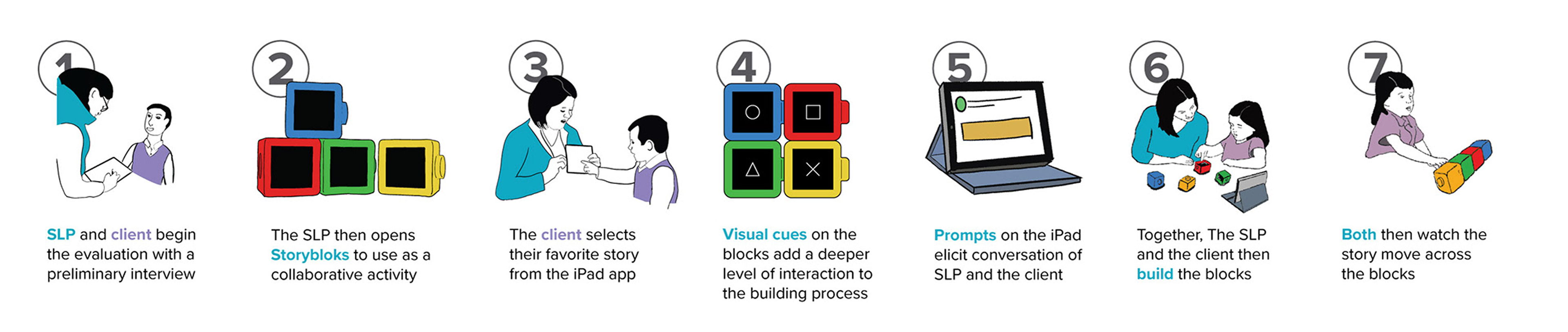
Storybloks is built on the foundation of two key children's activities - Building and Story-telling.
Within an evaluation session, a therapist and their client would collaborate to converse and build their favorite stories across 4 blocks. Visual cues on the blocks and a companion iPad app prompts clients to respond using specific facial shapes and trigger specific vocal cues, allowing the therapist to observe and gather insights about potential speech disorders without obtrusion.
Microphones on the blocks record and analyze all the data into a client profile on the app. This system makes the data collection and viewing experience more interactive and enjoyable for both therapists and their clients
The Blocks
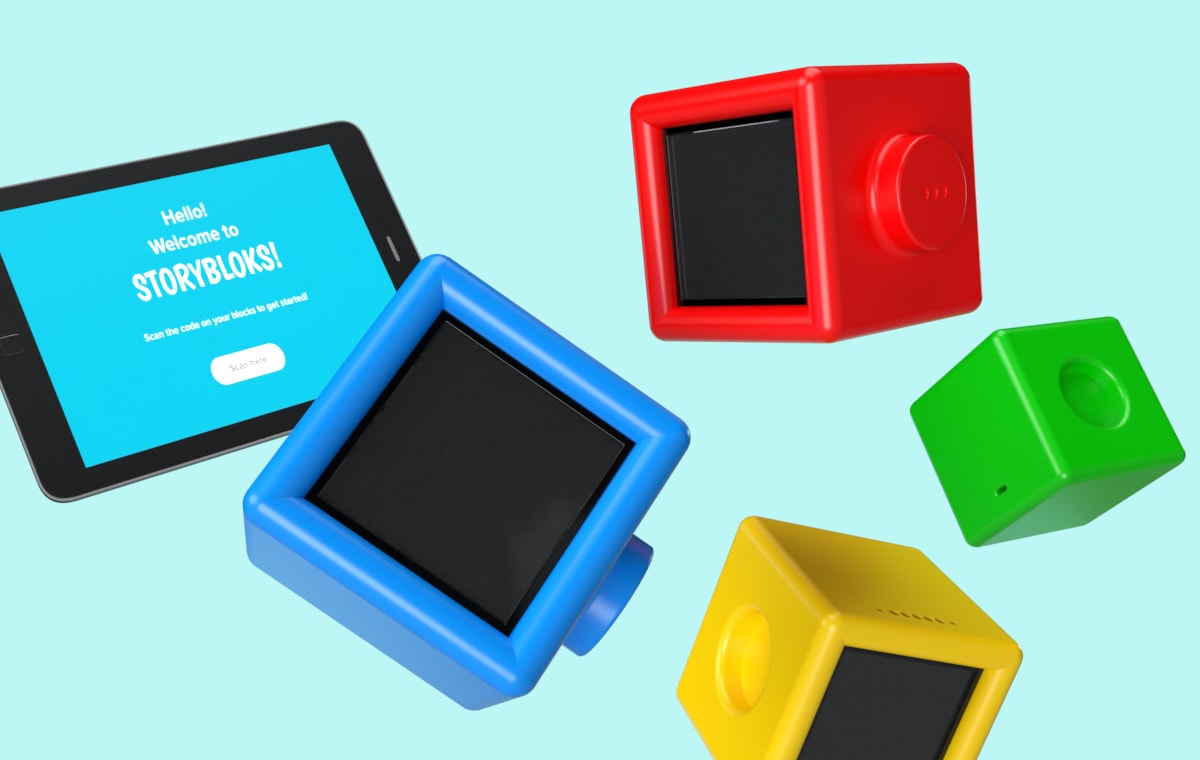
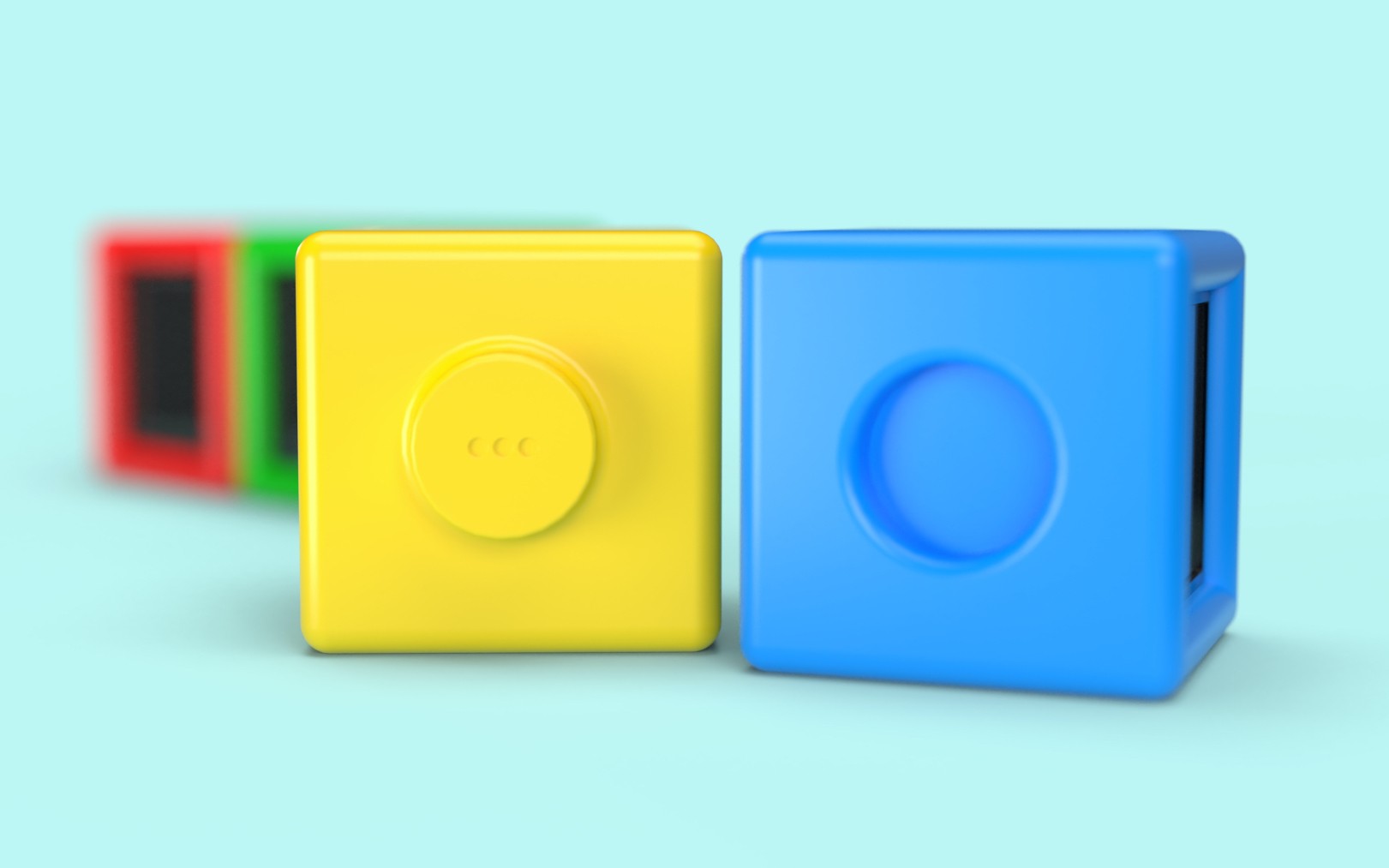
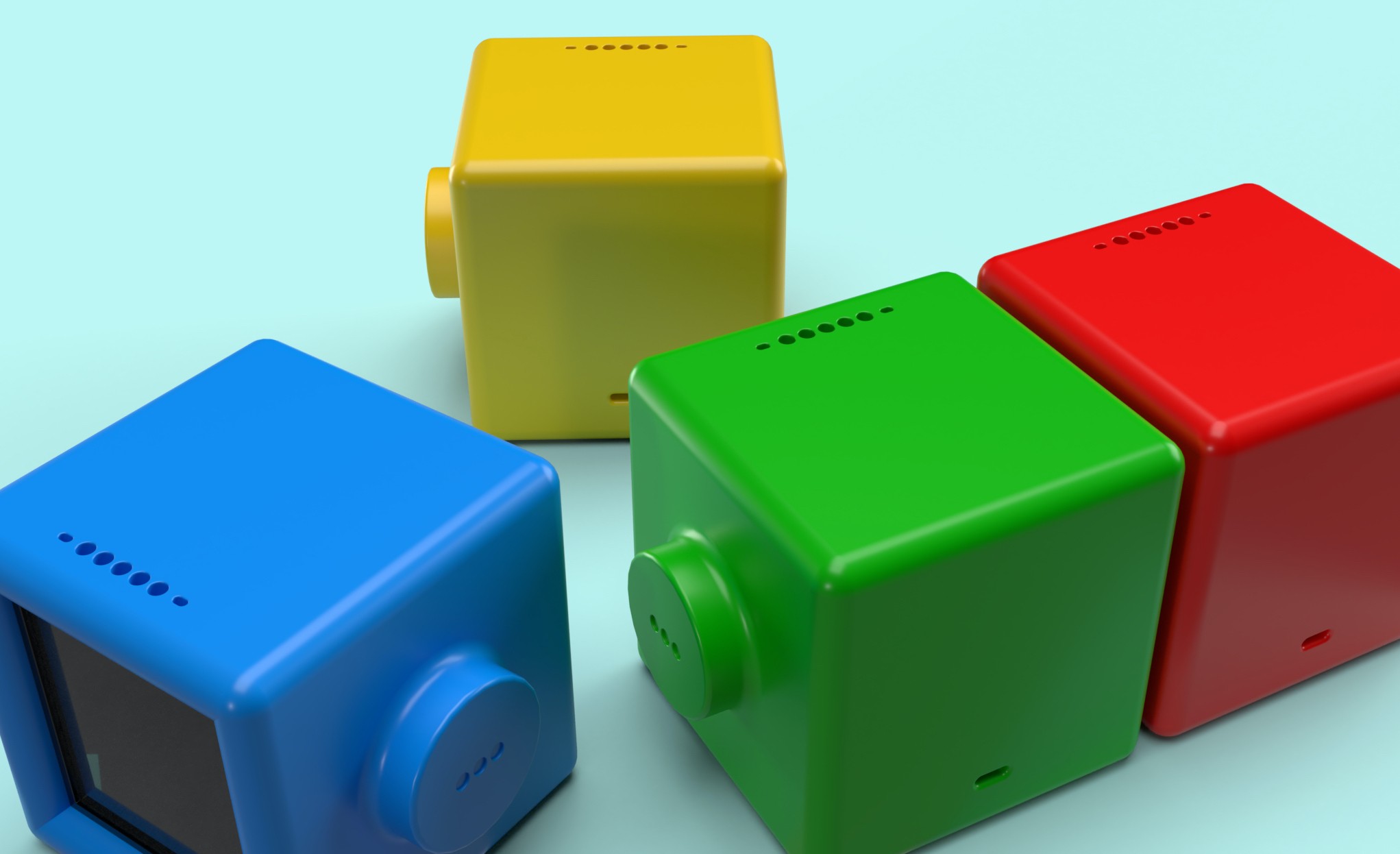
Each block represents a scene in the story. Together, the Speech therapist and their client can collaborate to build and watch the stories move across the displays.
Silicone Cases surround each block to offer durability and protection to the internal components, as well as prevent injury to the children interacting with them.
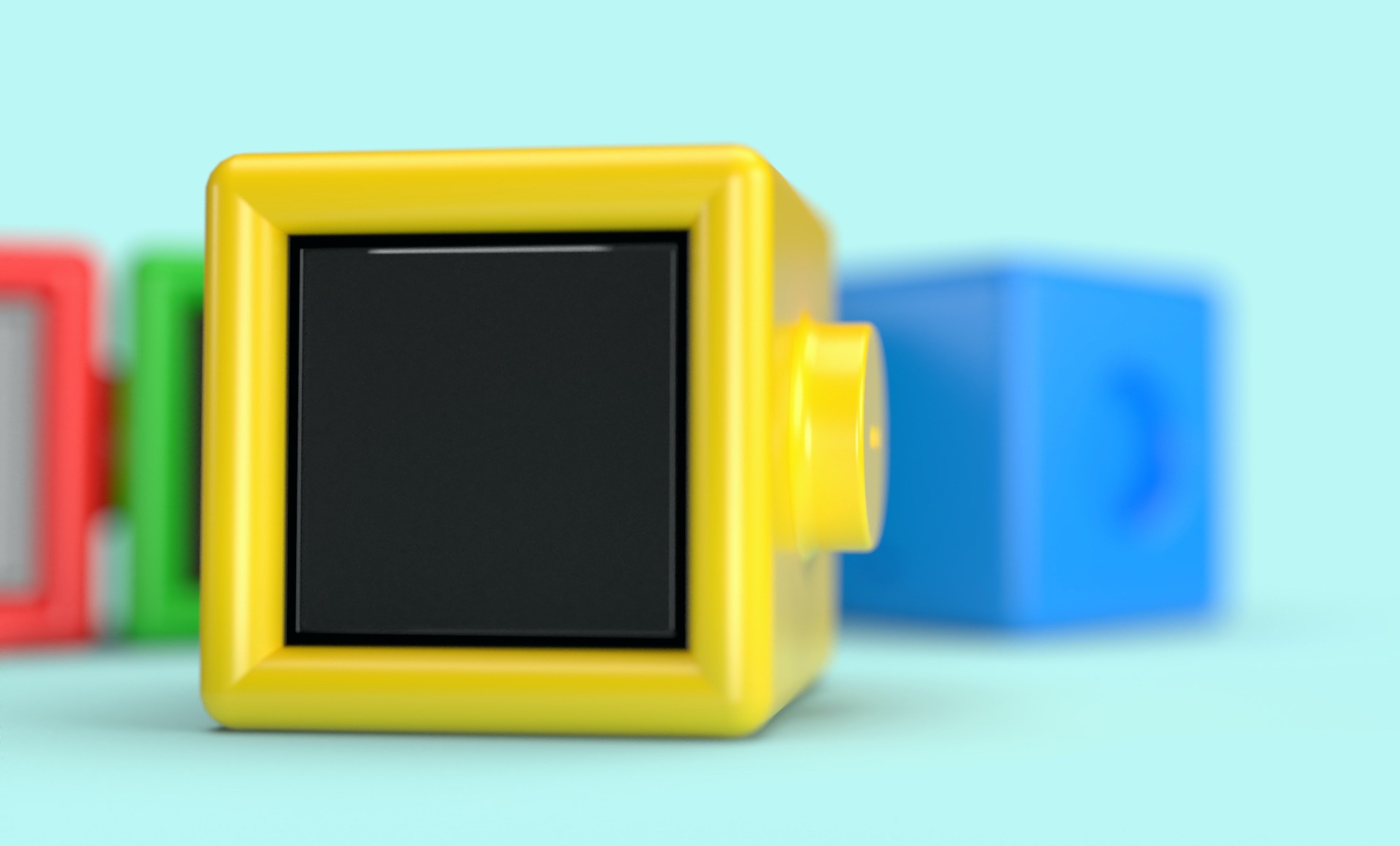
Magnetic Connection pins on each of the blocks bring a seamless building experience for the users and allows for the displays to communicate with each other.
Embedded speakers and microphones vocalize the stories, and collect essential vocal data from the clients for the speech therapists to further analyze
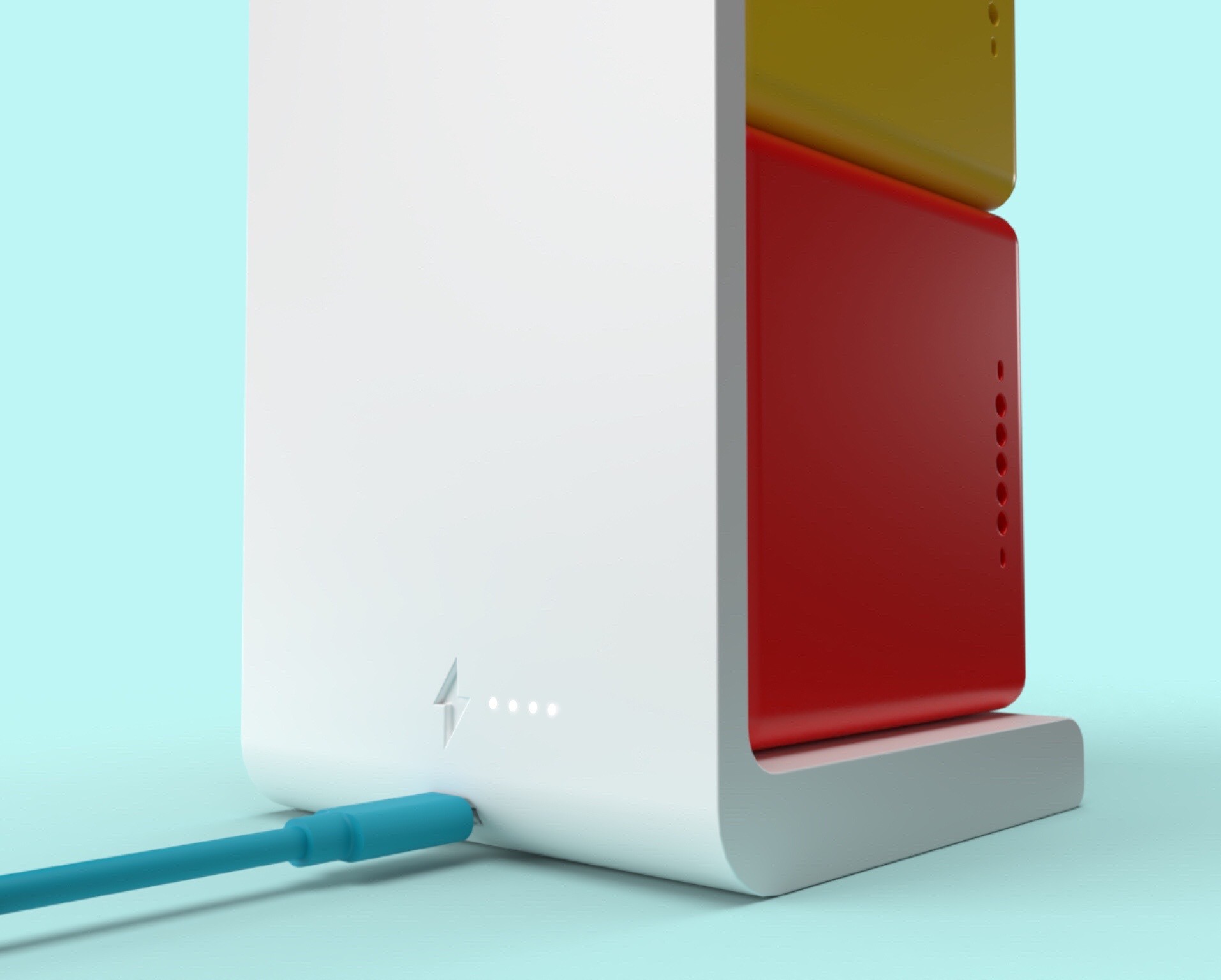
The Dock
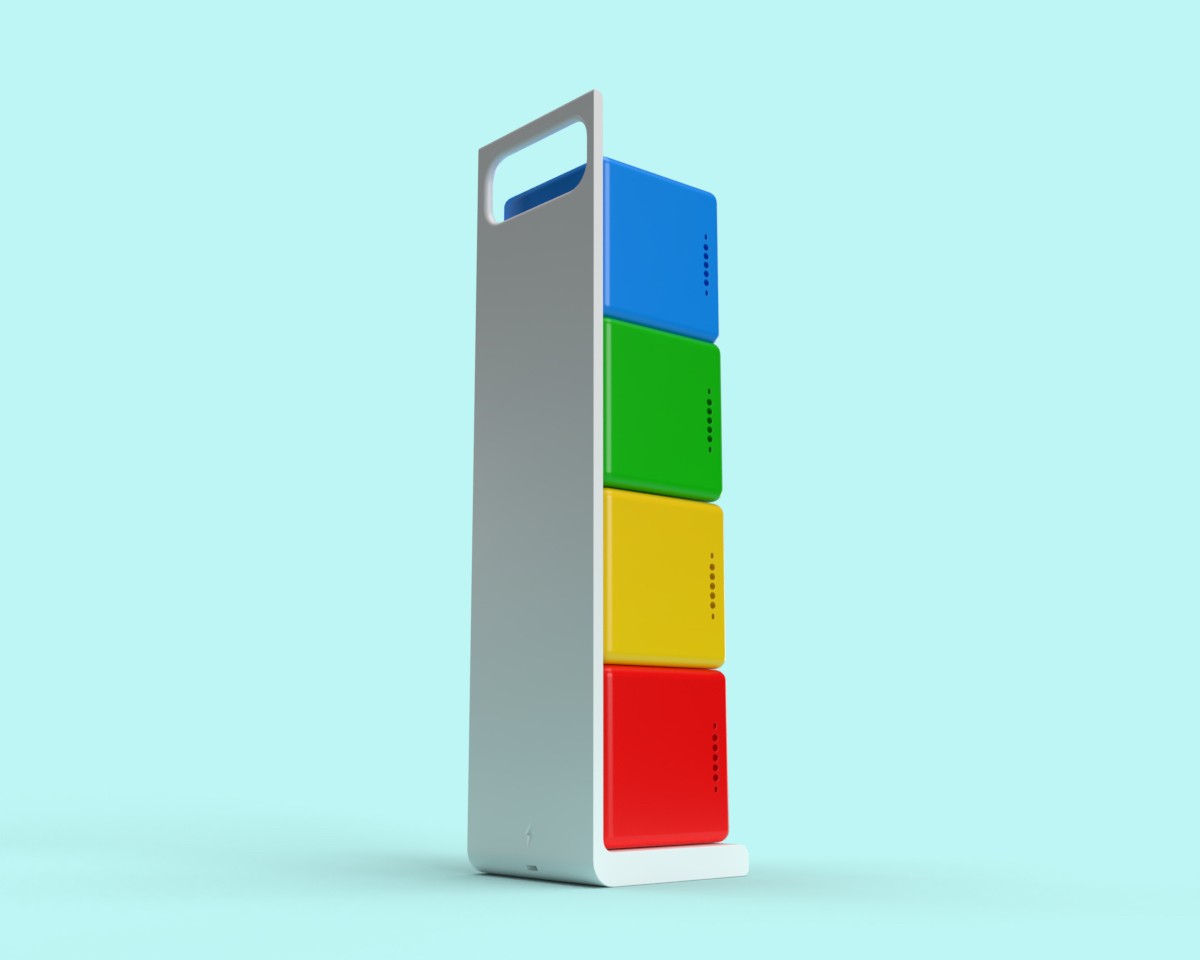
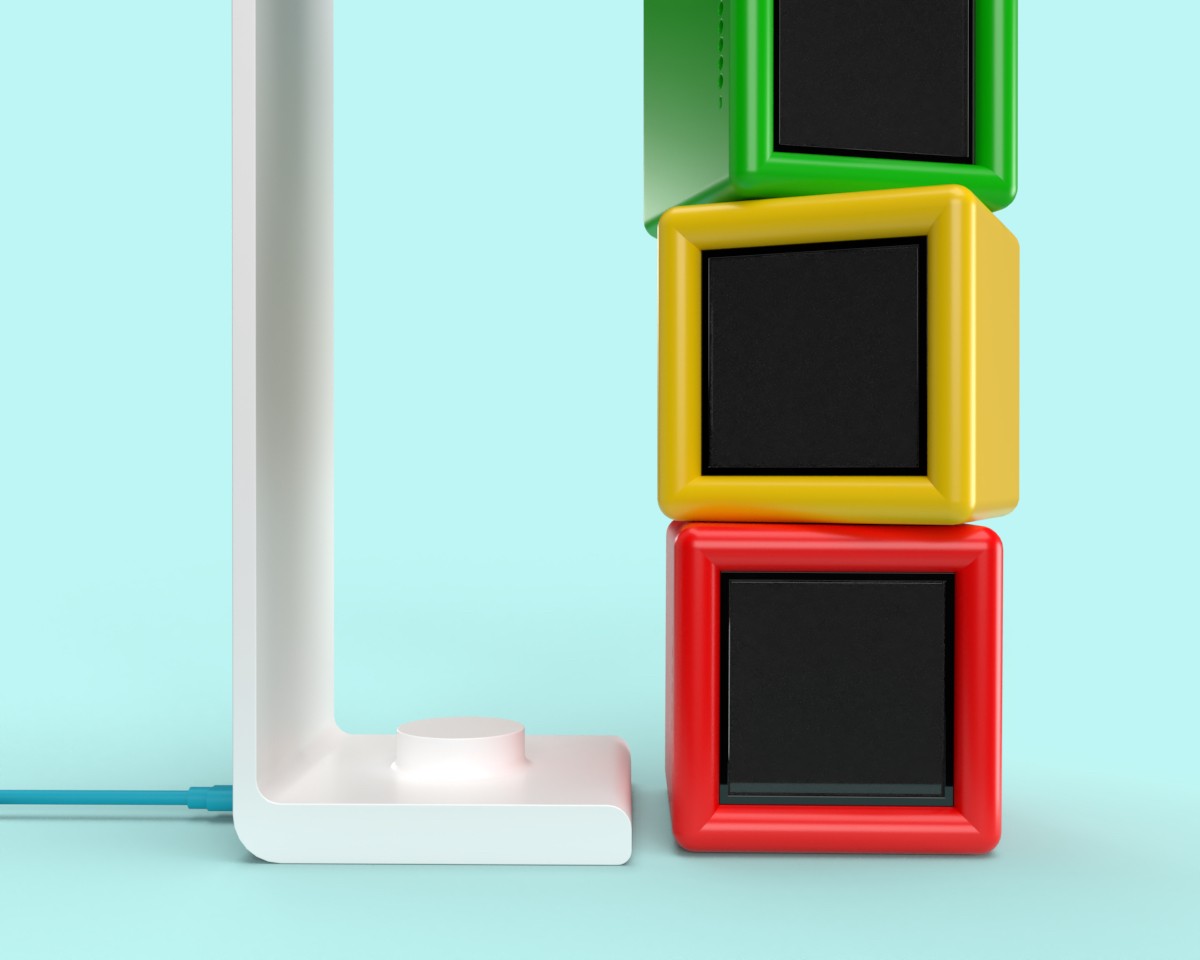
A Portable dock allows for the blocks to be stored and carried easily between session to session. Pass through charging due to the magnets on each storyblok allows for power to be pushed to each piece through a USB-C port on the back of the dock.
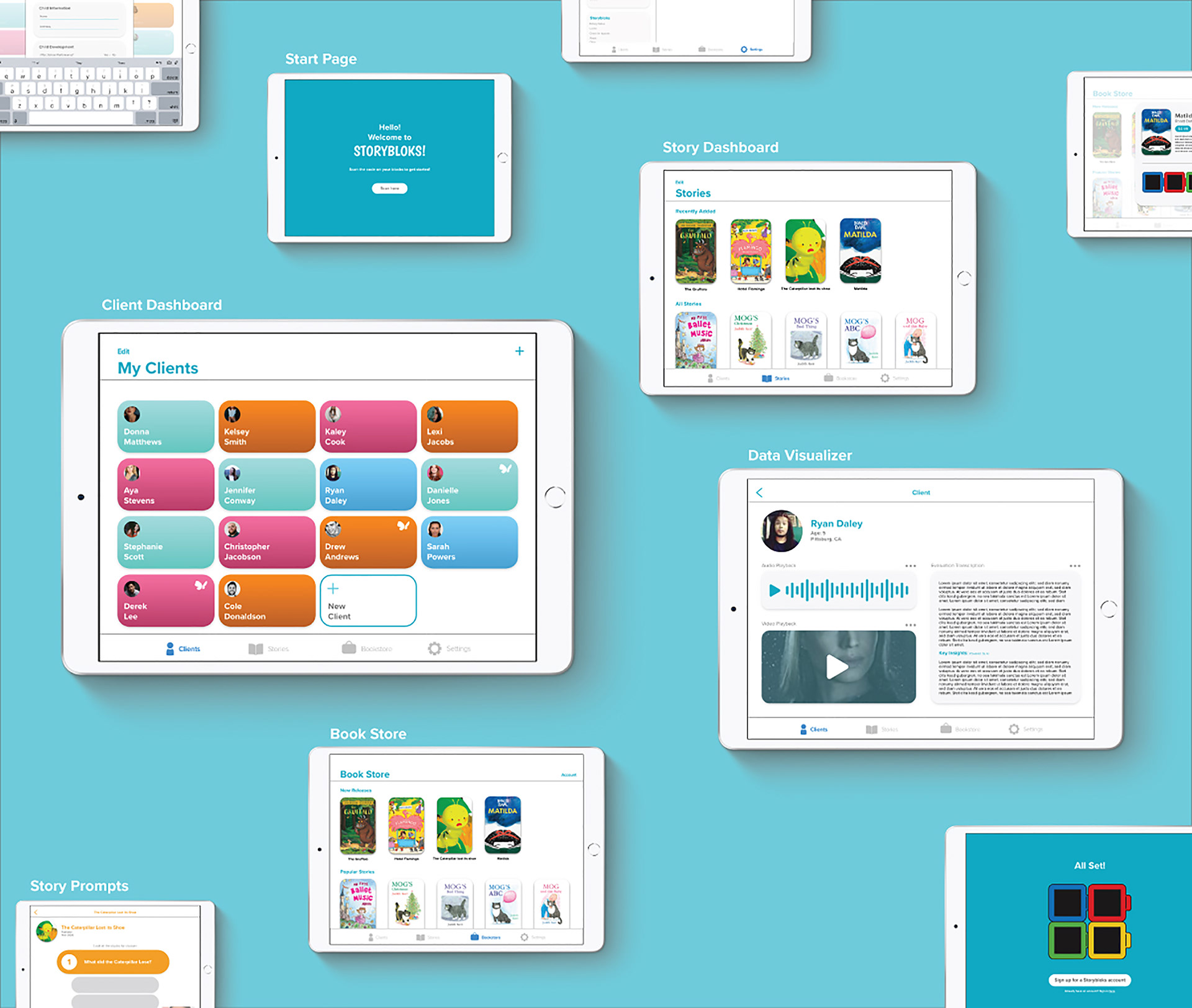
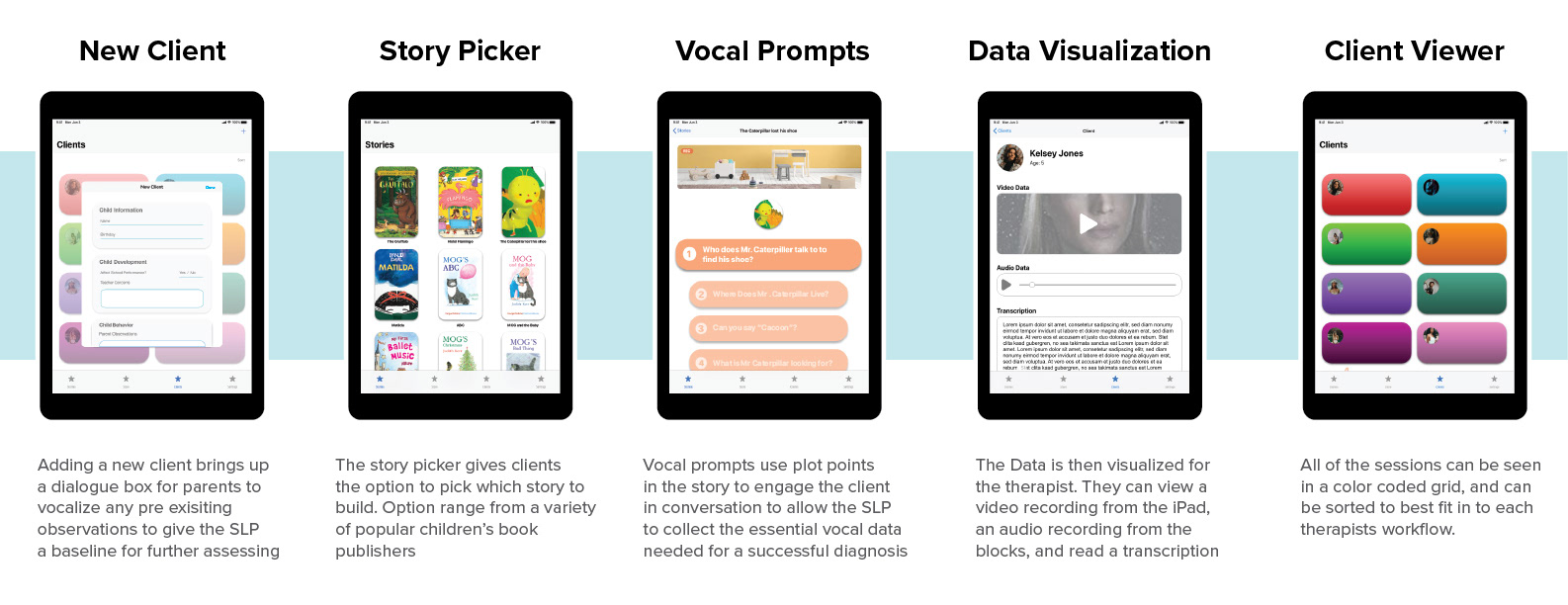
The Companion App
The Companion App is the dashboard for the Storybloks system. It allows the client to pick which story they would like to build, and visualizes all of the collected data in one place for the speech therapist
product video.